 The Nexus Archive
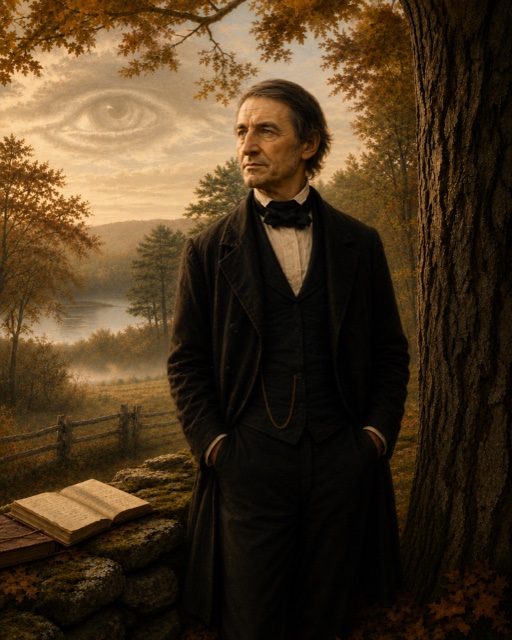
Transcendentalism
Emerson
The Voice of Self-Reliance · 19th-century America, 1803-1882
Emerson writes American essays on nature, self-reliance, intuition, and the independence of the mind.
- Self-reliance
- Nature
- Intuition
- Nonconformity
- Individual judgment
Life
Ralph Waldo Emerson was an American essayist, lecturer, and central figure of Transcendentalism. Nexus stages his source works through self-reliance, nature, intuition, and the independence of the mind.
The question
“What would it mean to trust the mind before convention?”
Argued against
Conformity, inherited opinion, imitation, and dead forms of thought.
Why Emerson matters
Emerson helped define a major American language of individual judgment, nature, and intellectual independence.
Works
- An Address Delivered Before the Senior Class in Divinity College, Cambridge, Sunday Evening, 15 July, 1838 Address · Advanced Emerson's 1838 address challenges future ministers to recover immediate religious experience from inherited forms.
- Essays: First Series Essay · Advanced Twelve essays testing self-trust, compensation, friendship, spirit, intellect, and art.
- Essays: Second Series Essay · Advanced Nine later essays on poetic making, experience, character, manners, nature, politics, and reform.
Quests with Emerson
- Self-Reliance and Nature A test of inward trust, civil conscience, nature, and the deliberate life. Self-Reliance and Nature Quest