 The Nexus Archive
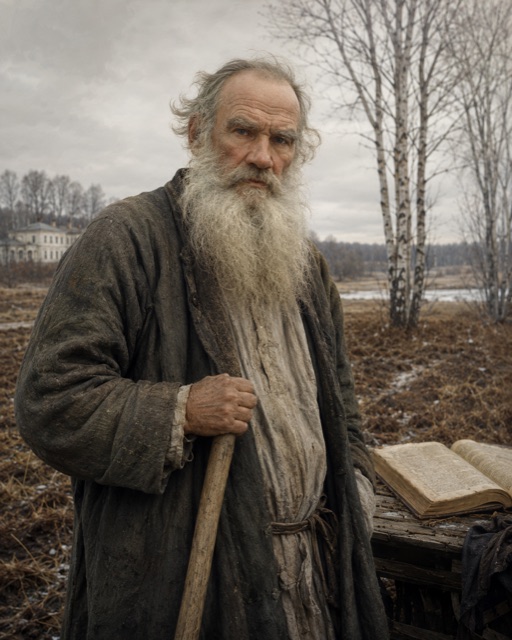
Moral Realism · Novel
Resurrection
by Tolstoy · The Searcher of Conscience · Russian Realism, 1828-1910
Nekhlúdoff confronts the woman he wronged and follows her sentence through courts, prisons, reform, and moral awakening.
- Brutal
- ~12 hr 45 min read
- 10 chapter guides
- Public domain
Start reading · Read the BOOK I, CHAPTER XI. THE TRIAL—MÁSLOVA CROSS-EXAMINED. guide free
Before the text
Editor's Prelude
The Juror Recognizes the Prisoner
Tolstoy begins with spring pressing against the filth of a prison yard, then brings Prince Nekhlúdoff into court to judge Katúsha Máslova, the woman he seduced and abandoned. Recognition forces him to face a past he has trained himself to forget.
The novel widens from personal guilt to courts, property, prisons, and revolutionary politics. Officials carry out their duties while suffering passes from one pair of hands to another. Among wealthy families, good manners make cruelty easy to overlook. Tolstoy moves between these worlds and the private thoughts that help people live with themselves.
Nekhlúdoff’s desire to atone cannot give him control over another person's future. His wish to make amends brings another danger: using her suffering to prove his own goodness. Máslova has a life and a will beyond the story he wants his repentance to tell.
The opening pages
BOOK I, CHAPTER I. MÁSLOVA IN PRISON.
Book I
RESURRECTION
CHAPTER I. MÁSLOVA IN PRISON.
Though hundreds of thousands had done their very best to disfigure the small piece of land on which they were crowded together, by paving the ground with stones, scraping away every vestige of vegetation, cutting down the trees, turning away birds and beasts, and filling the air with the smoke of naphtha and coal, still spring was spring, even in the town.
The sun shone warm, the air was balmy; everywhere, where it did not get scraped away, the grass revived and sprang up between the paving-stones as well as on the narrow strips of lawn on the boulevards. The birches, the poplars, and the wild cherry unfolded their gummy and fragrant leaves, the limes were expanding their opening buds; crows, sparrows, and pigeons, filled with the joy of spring, were getting their nests ready; the flies were buzzing along the walls, warmed by the sunshine. All were glad, the plants, the birds, the insects, and the children. But men, grown-up men and women, did not leave off cheating and tormenting themselves and each other. It was not this spring morning men thought sacred and worthy of consideration, not the beauty of God’s world, given for a joy to all creatures, this beauty which inclines the heart to peace, to harmony, and to love, but only their own devices for enslaving one another.
Thus, in the prison office of the Government town, it was not the fact that men and animals had received the grace and gladness of spring that was considered sacred and important, but that a notice, numbered and with a superscription, had come the day before, ordering that on this 28th day of April, at 9 a.m., three prisoners at present detained in the prison, a man and two women (one of these women, as the chief criminal, to be conducted separately), had to appear at Court. So now, on the 28th of April, at 8 o’clock, a jailer and soon after him a woman warder with curly grey hair, dressed in a jacket with sleeves trimmed with gold, with a blue-edged belt round her waist, and having a look of suffering on her face, came into the corridor.

“You want Máslova?” she asked, coming up to the cell with the jailer who was on duty.
The jailer, rattling the iron padlock, opened the door of the cell, from which there came a whiff of air fouler even than that in the corridor, and called out, “Máslova! to the Court,” and closed the door again.
Chapter guides · 10
BOOK I, CHAPTER XI. THE TRIAL—MÁSLOVA CROSS-EXAMINED.
Nekhlúdoff Recognizes the Prisoner
Called for jury service, Nekhlúdoff finds Katúsha among the accused. Now known as Máslova, she admits giving Smelkóff a powder but denies knowing that it was poison.
Before the charge
Katúsha grows up in the house of Nekhlúdoff’s aunts, half servant and half young lady. After their nephew betrays her and leaves her money, she discovers she is pregnant and gives notice. Her baby is sent to a foundlings’ hospital and is reported dead. Later service brings harassment and dismissal, and she eventually enters Kitáeva’s brothel.
Recognition on the jury
Nekhlúdoff recognizes the woman he had loved, betrayed, and tried to forget. He watches her from the jury’s front row while the indictment is read. When she glances toward him during questioning, he fears that she knows him; the narrator says she has not distinguished him from the others.
Máslova’s account of the money and powder
The charge joins Máslova with the hotel servants Kartínkin and Bótchkova in robbing and poisoning Smelkóff. Máslova denies theft: she says she fetched only the forty roubles he sent her for, and that he gave her the ring after striking her, to make her stay. In her account, Kartínkin gave her what she believed was a harmless sleeping draught; exhausted and unable to get Smelkóff to let her leave, she put it in his brandy.
BOOK I, CHAPTER XXIII. THE TRIAL—THE VERDICT.
The Jury Leaves Out the Decisive Words
The jury means to spare Máslova, but its written answer leaves her guilty of murder. Nekhlúdoff then welcomes the thought that punishment will take her out of his life.
A mistake in the verdict
The jurors decide Máslova did not steal the money or ring. They nevertheless answer that she is guilty, adding that she had no intent to rob and stole no property, but omitting the absence of intent to kill. Nekhlúdoff misses the omission, and Peter Gerásimovitch is out when the answers are read over. The words they leave out expose her to a sentence they did not intend.
The judges let it stand
The president sees the contradiction and proposes setting the verdict aside. One judge objects, and the president gives way while watching the time. The court withdraws to consider the sentence. Tired jurors and distracted judges have made the machinery of justice work against the woman they could have spared.
A disturbing relief
Until now, Nekhlúdoff has expected Máslova to be acquitted and to remain in the town, and he has not known how to act toward her. When Peter Gerásimovitch tells him that their answer will send her to Siberia, Nekhlúdoff first says it can be put right, then feels relieved. Her removal would release him from the awkward relationship he fears. He still wants to escape the consequences of his own betrayal.
BOOK I, CHAPTER XXXIV. THE ABSURDITY OF LAW—REFLECTIONS OF A JURYMAN.
Who Is Dangerous?
A young man’s trial makes Nekhlúdoff question a society that punishes theft while protecting the conditions that helped produce it.
BOOK I, CHAPTER XLVI. A PRISON FLOGGING.
Waiting for a Flogging
The prisoners fear a punishment ordered against men who resisted a jailer. Máslova is called to a visitor with another prisoner’s plea for help.
BOOK I, CHAPTER LVIII. THE VICE-GOVERNOR SUSPICIOUS.
Prison Questions at a Reception
Máslennikoff promises to consider two requests, but a question about flogging makes him try to end the conversation.
BOOK II, CHAPTER XI. AN ADVOCATE’S VIEWS ON JUDGES AND PROSECUTORS.
An Advocate Explains the Courts
An advocate offers practical help to prisoners, but his account of the courts deepens Nekhlúdoff’s unease about the people who run them.
BOOK II, CHAPTER XXIII. THE PUBLIC PROSECUTOR.
How Selenín Learned to Compromise
Selenín wants an honest, useful life. His career, marriage, and return to religion show how often he has yielded to expectations instead.
BOOK II, CHAPTER XXXV. “NOT MEN BUT STRANGE AND TERRIBLE CREATURES?”
Seeing People in the Procession
The marching prisoners seem less strange when Nekhlúdoff recognizes familiar faces. Two children watching them learn very different lessons.
BOOK III, CHAPTER IV. SIMONSON.
Simonson’s Regard for Máslova
Simonson builds his life around beliefs he has tested for himself. His love helps Máslova see value in the person she is now.
BOOK III, CHAPTER XVI. SIMONSON SPEAKS TO NEKHLÚDOFF.
Simonson’s Wish to Marry Máslova
Simonson asks whether Nekhlúdoff supports his wish to marry Máslova. Both men say the decision depends on her.
Questions readers ask
- How long does it take to read Resurrection?
- About 12 hr 45 min in total.
- How difficult is Resurrection?
- Brutal. A long novel; about 13 hours of reading.
- Which translation is this?
- The Louise Maude translation from the Russian, first published in 1899. The text follows Resurrection, translated by Louise Maude, with illustrations by Leonid Pasternak (New York: Dodd, Mead & Company, 1900).
- Can I read Resurrection for free?
- Resurrection is part of Nexus Premium, so reading it needs an account and a Premium subscription. The opening above and two chapter guides on this page are free to read.
- How many chapter guides are there?
- 10 chapter guides, written by the Nexus editors. Two open in full here; the rest show their opening line.
About Tolstoy
Leo Tolstoy was a Russian novelist, moral thinker, and social critic whose major works brought family life, history, death, violence, faith, and moral awakening into vast narrative form. His later spiritual crisis reshaped his public life and gave his fiction an even sharper judgment on vanity and false living.
“What does a life become when it can no longer hide from truth?”
Tolstoy gives Nexus the widest moral canvas in fiction: private homes, public history, illness, war, faith, and the exact moment when a person sees life differently.
Source text: public domain. Chapter guides: original Nexus writing. Resurrection is part of The Nexus Archive, guided Quests through the great works.